

The Sacred Caravan
Why Even the Lone Goddess Needs a Tribe

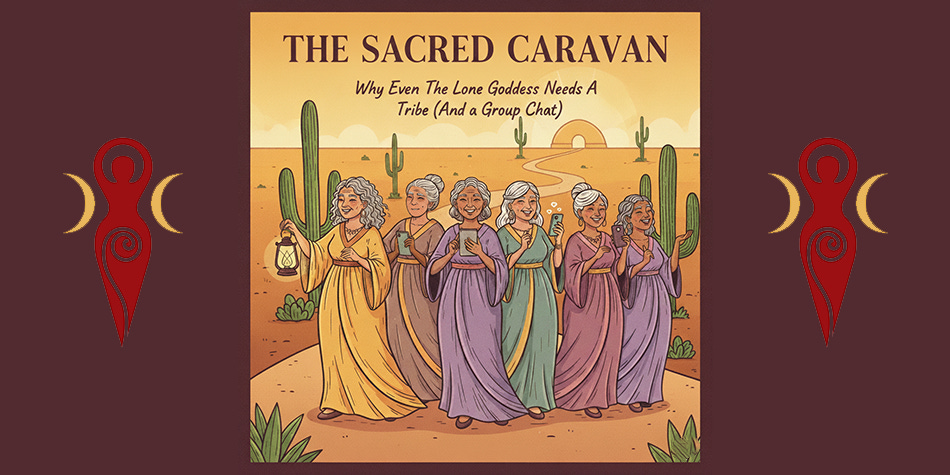
For many of us, the “Goddess” archetype is one of fierce independence. We’ve spent decades cultivating our inner sanctuaries, leaning into the peace of a quiet house, and mastering the art of solitude. If you are naturally isolative—someone who recharges in the silence of their own company and views a “surprise doorbell ring” as a personal horizontal-scale emergency—the idea of a social network might sound more like a chore than a lifeline.
However, in the field of gerontology, there is a powerful concept known as the Social Convoy (or Caravan) Model. It suggests that we travel through life surrounded by a moving circle of people who provide support at different stages.
Think of it this way: Even a desert queen needs a crew to tell her when her camels are wandering off or if she’s accidentally started talking to a mirage. As we age, this caravan becomes our witness. Even for the most introverted Goddess, having a tribe is the ultimate act of self-preservation.
The Paradox of the Independent Soul
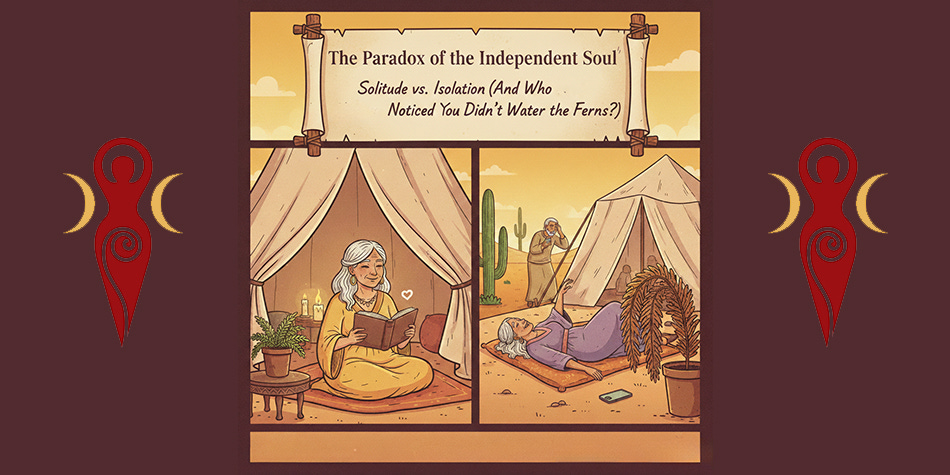
There is a beautiful strength in enjoying your own company. (Let’s be honest: your own company doesn’t leave dirty dishes in the sink or interrupt your favorite podcast). But there is a fine line between solitude, which is restorative, and isolation, which is how people end up being discovered three weeks postmortem because the mail carrier noticed an unusual abundance of grocery flyers and the cat sunning in the window looks especially fat.
When we live entirely behind closed doors, we lose our “early warning system.” The Caravan serves two critical roles for the independent senior.
The Witness of Change: Significant behavioral shifts—forgetfulness, a change in gait, or suddenly deciding that wearing a bathrobe to the grocery store is “avant-garde”—are often invisible to us. A friend who sees you once a week will notice if your “spark” has dimmed in a way that you might dismiss as just being “in a mood.”
The “Hey, You Okay?” Safety Net: In the event of a sudden fall or a severe illness, time is the most precious resource we have. If you’re a “loner” without a caravan, you could be lying on the kitchen floor for two days contemplating the dust bunnies under the fridge before anyone suspects a thing.
Having a caravan isn’t about giving up your privacy; it’s about ensuring someone is looking for you if you don’t show up to the oasis.
To be clear, this applies even if your “solitude” includes having a beloved and dialed in partner who lives with you. If there is a carbon monoxide leak or a home invasion, both of you are going down. If your partner is so used to being with you that they don’t always “see” you, they might miss subtle changes that are more apparent to someone who is not in your energy every hour of every day. We need a caravan in addition to our devoted partner.
The Modern Caravan: Technology as a Bridge
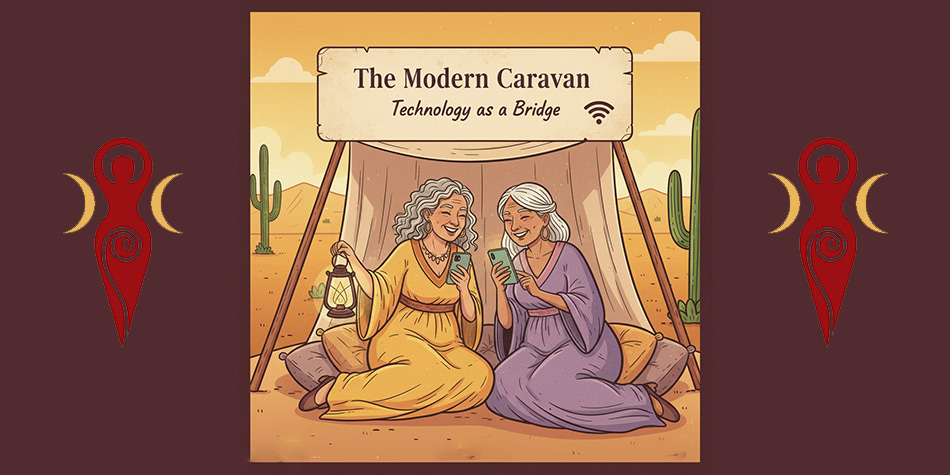
The digital age is a godsend for those of us who value our space. It allows us to be “seen” without actually having to put on a bra or host a dinner party.
The “Proof of Life” Text: A simple group chat with two or three close friends where everyone sends a “good morning” emoji. It’s low-effort, high-impact, and lets everyone know you haven’t been abducted by aliens (or tripped over the cat).
Smart Home Sidekicks: From watches that detect if you’ve taken a tumble to smart fridges that can alert a loved one if you haven’t opened the door for a snack in 24 hours, technology acts as a silent, non-judgmental member of your caravan.
Niche Online Tribes: Whether it’s a group for heirloom tomato enthusiasts or fans of 1970s detective shows, digital communities notice your absence. If “GoddessGardener44” hasn’t posted in three days, the tribe starts asking questions.
Beyond Safety: The Spiritual Vitality of the Tribe
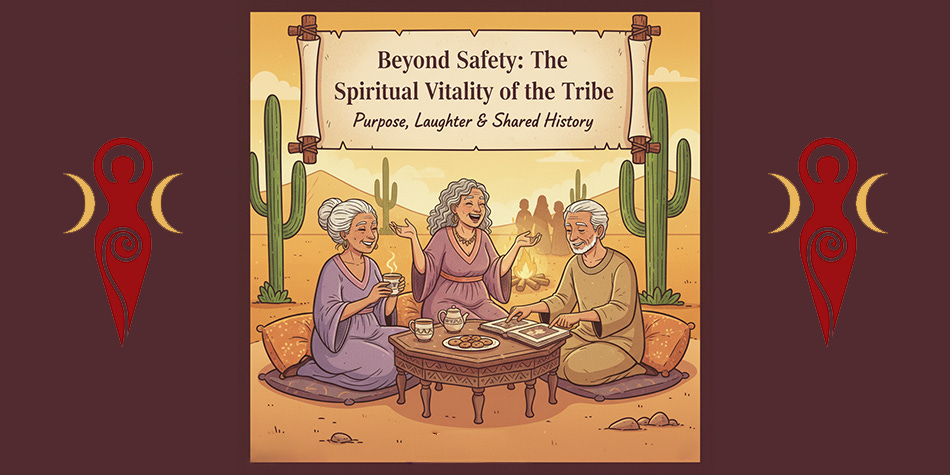
While safety is the practical driver, the “Body of a Goddess” theme thrives on the energy of others. A caravan provides:
Cognitive Resiliency: Engaging in deep conversation (or even a spirited debate about why the neighbor’s new fence is an eyesore) keeps the neural pathways firing.
Purpose through Reciprocity: Being in a caravan means you are also looking out for them. Nothing keeps you young like the feeling of being needed—or the satisfaction of being the one who remembers where your friend left her glasses.
Shared History: There is profound healing in being around people who knew you “when.” They are the keepers of your legends, reminding you of the Goddess you’ve always been, even on days you feel more like a mere mortal.
Building Your Caravan (Without Losing Your Sanity)
If you’ve spent years being a “lone wolf,” building a caravan can feel daunting. You don’t need a stadium; you just need a circle.
Identify your “First Circle”: Who are the 2-3 people you’d actually trust with your spare key (and your browser history)?
Establish a “Check-In” Protocol: Be honest. “I love my alone time, but let’s have a system where we ping each other if we haven’t heard a peep in 48 hours so nobody has to call the cops for a wellness check.”
Join a “Third Place”: Find a spot—a coffee shop, a yoga studio, or a library—where the staff knows your name. If the “regular” doesn’t show up for her Tuesday latte, someone notices.
Your independence is a gift, but your presence is a treasure. Ensure you have a caravan that knows the value of that treasure—and knows exactly when to come knocking (and when not to).
If you are — like me — a Virgo and require a list and a workflow sheet, consider creating a pact with those in your caravan. I’ve included a proto-pact below for you to use if you wish:
The “Goddess Protection & Privacy” Pact
An Official Agreement for the Members of My Caravan
PURPOSE: To ensure that I, the undersigned Goddess, can enjoy my sacred solitude without actually becoming a cautionary tale on the local evening news.
1. The “Proof of Life” Protocol
I agree to provide a daily (or bi-daily) digital signal that I am still upright and functioning.
The Signal: This may consist of a thumbs-up emoji, a meme of a cat doing something questionable, or a 3-paragraph rant about the price of organic veggies.
The Deadline: If you haven’t seen a “ping” by [Insert Time], you are officially authorized to wonder where I am.
2. The Intervention Escalation Scale
In the event of my silence, the Caravan agrees to follow these steps in order (to avoid unnecessary drama):
Level 1 (The Gentle Nudge): Send a text asking if maybe my Wi-Fi is down or my power is out or if I am perhaps dead.
Level 2 (The Follow-Up): A phone call. If I don’t answer, assume I am either napping deeply or the phone is at the bottom of a laundry basket or you number accidentaly came up as “Spam Risk.” Alternately, if I have a partner and you are in contact with that partner, give them a nudge and ask the important questions.
Level 3 (The Drive-By): A casual stroll past my house. If the mail is overflowing and my favorite plants look thirsty, you have permission to get suspicious. (This one is for the benefit of other, more normal humans since my mail is a mile from my house and my house is deep in the nethers.)
Level 4 (The Full Goddess Rescue): You are hereby authorized to use the spare key. If you find me mid-nap, you owe me a coffee. If you find me on the floor, you are the hero of the century.
3. The “No-Judgment” Clause
If you enter my home for a safety check, you hereby swear a blood oath to ignore:
Any stacks of “to-be-read” books that have reached a structural hazard height.
The fact that I may be wearing my old lady nightgown at 3:00 PM.
The sheer volume of empty Diet Mountain Dew cans in the recycling bin.
4. Reciprocal Divinity
I promise to do the same for you. If you go dark, I will be the one knocking on your door (possibly with snacks) to make sure your Goddess crown hasn’t slipped.
Signed: ___________________________ (The Independent Goddess)
Witnessed by: ______________________ (The Trusted Caravan Member)
The grannie nightgown at 3 pm is the new home office couture.